Why Is My Child Mean?!?
There have been many parent posts online regarding the general and persistent negative behaviour patterns of their children. “Why is my child mean?” They describe their children as being “mean” on a regular basis. It’s not uncommon to see this default behaviour in children who have neurological challenges. In my presentations, I call this the “Awfulizer Syndrome“. To these children, everything is awful. They always seem annoyed or angry. They are routinely mean or insulting. They often engage in name calling and typically communicate in an unkind or angry tone of voice. Generally negative in most aspects of their daily life, they are most often disagreeable. Without intervention and support, it is difficult to correct these behaviours. From personal experience, as a person who has overcome this challenge and a parent who has dealt with it, I can tell you it takes a great deal of effort to overcome this neurological affect.
Step One: Identify your child’s behaviours and the responses of your family members
Identify and address when your child is mean through his/her words, voice or actions. Be sure to do this when your child is in a calm and receptive state of mind. Session need to be frequent and on-going. Share your feelings with your child. Explain how their words/tone/behaviours make you feel, and how it affects your thinking about them (e.g. “Although I love you, your tone of voice makes me feel mad and I don’t want to be around you when you are mean to me”). This response is a natural consequence – people don’t want to be around people who are mean or unkind.
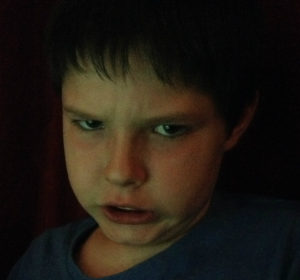
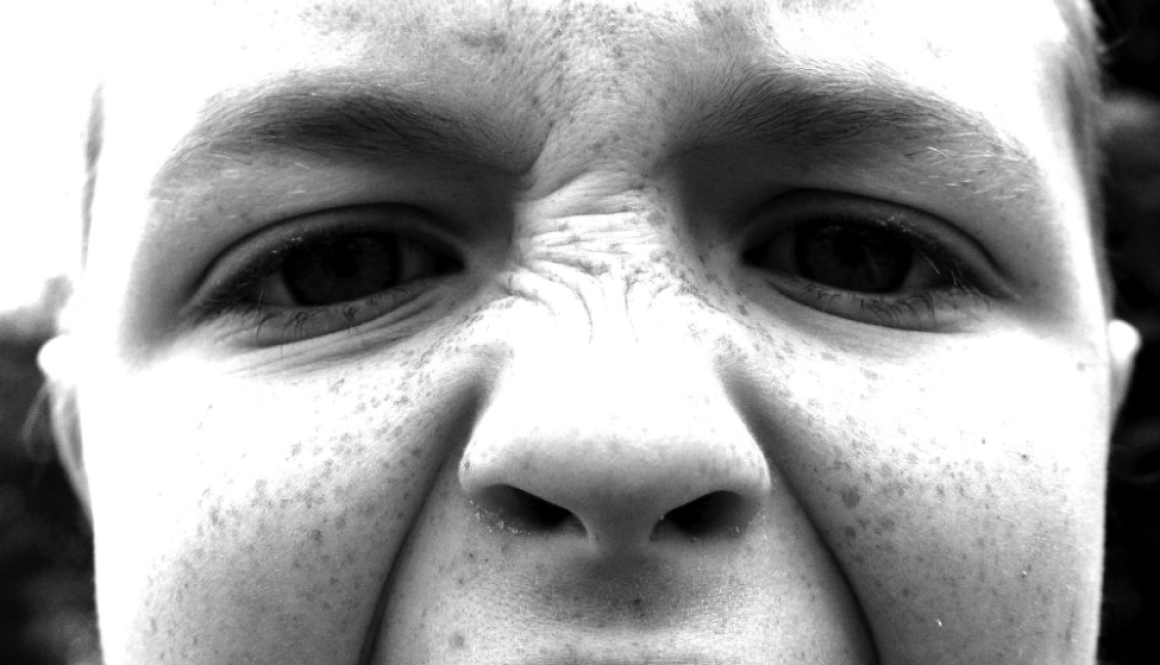
You need to make your child recognize and understand their behaviours before you can begin to change them. At times, it may be necessary to actually reflect behaviours back to your child by demonstrating them in a kind way. There was a time in my stepsons “awareness training” where I actually showed him what he looked like by putting him in front of a mirror to show him how threatening he looked. I showed him his angry face and clenched fists, and clearly stated that he was not allowed to be near us when he presented in this threatening way. Prior to this moment, he had no idea how he looked or sounded. It was not an easy process to embark. He was enraged by us showing him what he looked like. In the end, it was worth it. We convinced him that showing him explicitly how he appeared was something we were doing for him and not to him. It was not punishment but a step necessary for self-insight. I am not sure he could have learned as much about himself and how he appears to others without this step.
Step Two: Show and Teach
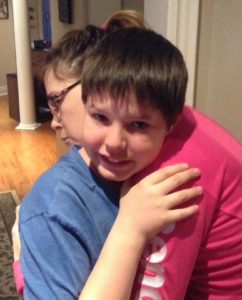
Do not assume your child knows how to be kind, even though you are kind in all you do to model appropriately for your child. Many children with these disorders do not learn by watching. They miss most body language and social cues (facial expressions and tone of voice). As a result, they must be explicitly taught. You will need to teach them appropriate words and actions, and explain when and how to use them (e.g. “When you upset someone, you must say “I’m sorry I hurt your feelings. I didn’t mean to”).
As a parent of neurologically challenged children, I admit it’s not always easy to for me to maintain my composure. In times such as this, it is also important to apologize to your child. As the grown-up it is our responsibility to model how to demonstrate how to keep calm and be in control. In addition to repairing any possible damage to your relationship with your child, you will be also teaching your child how to apologize.
Step Three: In the moment
When my stepson engages in mean behaviour, we politely remind him with positive language, “You need to use a friendly and caring tone of voice”, “Please use kind words” , “You need to try again, with a friendly (or caring) face”.
(See Neurologically Gifted’s article: Using Positive Language for Success)
If he continues with unkind behaviour we then issue a choice for him to self-correct, “You need to use a friendly voice”, or “You need to go somewhere else (give a choice) because we don’t like your behaviour right now and don’t want to be around you”. (such feelings are normal, and are the result of the child’s behaviour. This is a true-life natural consequence that your child needs to be aware of for understanding social norms. If he can’t make a positive choice independently then we would help by making the decision for him
(see Neurologically Gifted’s article Taking On Rage 4: Prepare a Plan)
While teaching my stepson, there were good days and bad days. I was not disheartened when he seemed to “slip back” a few steps. We focused on his progress, when he applied his new learning, and we built on those moments. Always quick to give him praise for making a good choice, we built his confidence and his emotional investment in the members of our family. Once distant and unconnected to his family, he now knows he is loved, and he not only cares about us, he is quick to admit when he has made a mistake, and asks for help when he needs it.
We all do, in our family.

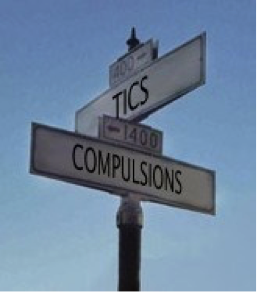 Coprolalia can occur in Obsessive Compulsive Disorder as well as Tourette Syndrome. People who have Obsessive Compulsive Disorder as well as Tourette Syndrome have a greater struggle as the two disorders may interact with each other and may perpetuate coprolalia. The obsession with performing, (or not performing), the inappropriate behaviour provokes the urge to follow through with it, and vice versa. (see Post:
 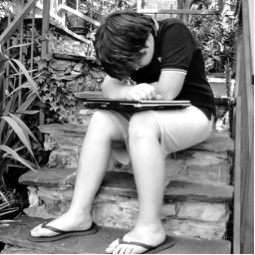 People with coprolalia may feel embarrassed and ashamed of their symptoms. There is no will or want to the expression of coprolalia. Often, the response to coprolalia and the lack of understanding and acceptance from other people amplifies the individual’s shame and embarrassment, leading to isolation. Fear of performing the tic in public and being constantly scrutinized and judged may also lead to isolation and depression. In addition, it drives the individual to constantly think about their coprolalia symptoms -What will I tic? -How will I handle it? -How can I suppress it -Who will laugh or stare? -Who will run away? In turn, the stress and hyper focusing will make the coprolalia occur more frequently and intensely. In this way, benign symptoms of coprolalia become malignant due to the stigmatization and judgment of the onlookers.
 Coprolalia, like other tics, is prompted by a premonitory urge. For example, racial slurs may be prompted by seeing a person of a particular race; sexual comments may be prompted by seeing a member of the opposite sex. Seeing these people reminds the brain of forbidden/unacceptable words. Coprolalia co-exists alongside the faulty auto-inhibitory functions within the brain. When faced, for example, with a person of the opposite sex, the person may quickly think “I’d better not say “_______”. By thinking this thought, the individual has put the offensive phrase into their own mind. He/she will then be stuck with the phrase in their head. Coupled with poor impulsivity control, it can appear as if the person is willingly thinking the thought and then saying it without concern for the other person’s feelings. In truth, coprolalia has no relationship or meaning to the observed person and is not a personal attack. There just happened to be something within the environment that prompted that particular urge. For the person with coprolalia, they struggle to prevent themselves from saying or doing the worst possible thing in the particular situation. Imagine having to sit in a church or other place of worship. The mere sight of religious icons evokes meaning in our brains. This meaning cues the brain and conjures words (good and bad). A sufferer of coprolalia will focus on restraining himself or herself from shouting offensive words. This focus will bring these words to the tip of his/her tongue, and eventually out of the mouth. The struggle is internal and far more painful for the individual than those who may overhear the utterance. Coprolalia is not directed at other people nor intended to cause harm or fear in others. Oddly enough, the more a sufferer wants to STOP saying an offensive word, the more likely they are to say it – because of their focus.
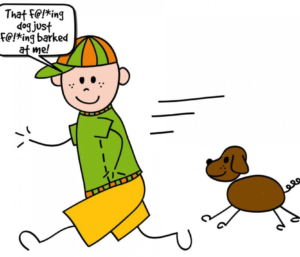 Another confusing aspect about the expression of coprolalia involves the incorporation of coprolalia into regular speech and actions. This phenomenon is more common in children. The urge to say the word may be strong enough that it will occur within the context of speech. The tic is somewhat satisfied for the child, however; it very much appears as being a voluntary addition. Consider the F_ word as a vocal tic that is coprolalia. The child may voluntarily slip it into speech in a fluent way, satisfying the tic but being unaware of how voluntary the tic appears to be to others. For example, “That f_ing dog just f_ing barked at me”. This is very difficult for others (especially parents and teachers) to understand. I remember telling my child, when coprolalia began for him, to just pick one or two of the words and say them out of a sentence so people would more easily identify it as coprolalia! This strategy didn’t work because he doesn’t have the option to choose which tics he says, and because he never really understood why it would make a difference how or when it was expressed. To him, slipping it into speech was more “normal” than randomly shouting a bad word. And doing it my way didn’t satisfy his urge, of course.
 Another difficult characteristic of coprolalia that further impedes understanding is that stress increases tic frequency and intensity. Parents of children with Tourette Syndrome are very familiar with this phenomena. Both negative and positive stress occupy significant mental attention. In these situations, a child has less mental energy to suppress his/her tic symptoms. As a result, more tics are expressed, to conserve mental energy for all the other things that are consuming the child’s mental resources. Consider that anger, disappointment and frustration are major stresses. When a child attends to these negative emotions, they do not expend energy on suppressing their tics or coprolalia. In a situation that provokes strong feelings of anger in the child, tics and coprolalia escalate. In this type of situation, you will have a child who is angry, using inappropriate language, and louder because you have asked them to do something like “Come do your homework now, please.” What looks like a child reacting disrespectfully and aggressively may simply be a child reacting to a strong emotion, increasing tic expression due to the displacement of mental focus to the emotion. This situation is extremely difficult to manage and creates intense stress on families living with neurological disorders.


 I would have never predicted that this would be our new normal after school routine or that this new normal would actually feel good!